The Hyper Mobility Issue
Some people stretch and never feel “tight.” They can fold forward with ease, lock out their elbows without thinking, or drop into deep ranges of motion without much warm-up. That can look like a gift, especially in dance, gymnastics, cheer, yoga, and other athletic spaces.
But hyper mobility is not the same thing as healthy mobility.
A hyper mobile person may have plenty of range, yet still struggle with pain, fatigue, clicking joints, recurring strains, or a feeling that their body is hard to control. The goal is not to take flexibility away. The goal is to build strength, awareness, and joint control so that movement feels safer and more reliable.
This article covers how care differs for hyper mobility versus immobility, five common signs of being hyper mobile, advice from our team, our excitement about the Golden Gymnastics Open House in Lakewood, and why dry needling at home may help some people manage muscle tension and pain.
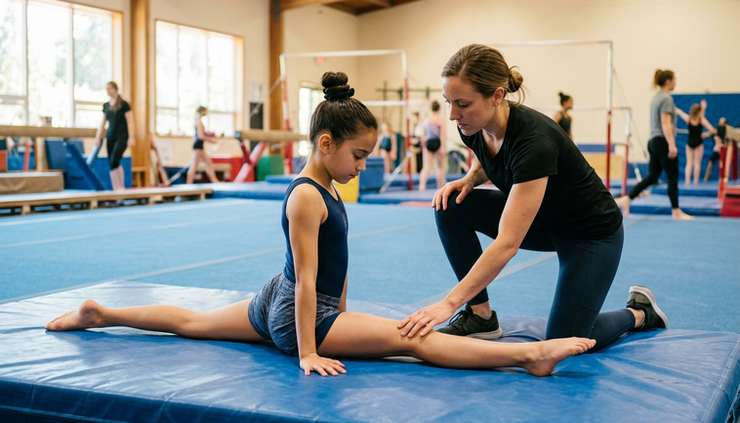
Hyper mobility and immobility need different corrections
When someone is immobile, the body often needs help gaining motion. That may include mobility drills, stretching, joint work, soft tissue care, breathing strategies, and gradual exposure to new ranges.
When someone is hyper mobile, the body often already has access to large ranges of motion. The missing piece is usually control inside that range.
That changes the plan.
Immobility often needs more range
An immobile person may feel stiff or blocked. They may struggle to squat, reach overhead, rotate the spine, or touch their toes. Care often focuses on helping the body tolerate more movement.
That might include:
Gentle stretching
Joint mobility exercises
Soft tissue work
Strengthening through a fuller range
Posture and movement retraining
For this person, stretching might be helpful because the main problem is limited access to movement.
Hyper mobility often needs more control
A hyper mobile person may move too far too easily. Their joints may rest near end range without much muscular support. They may feel good during a stretch, then feel sore, unstable, or irritated later.
Care often focuses on:
Strength training in controlled ranges
Slower movement tempo
Balance and coordination drills
Core and hip stability
Shoulder blade control
Avoiding repeated end-range hanging
Learning where “neutral” feels in the body
For this person, the answer is usually not more stretching. It is better strength around the available motion.
Five signs that you may be hyper mobile
Hyper mobility exists on a spectrum. Some people have mild joint looseness in a few areas. Others have whole-body hyper mobility that affects how they train, recover, and feel day to day.
Here are five signs that may point to hyper mobility.
1. Your joints move past what looks normal
This may show up as elbows or knees that bend backward, thumbs that easily move toward the forearm, or shoulders that feel like they can rotate farther than most people’s.
This does not automatically mean something is wrong. Some people naturally have more range. The concern rises when large range comes with pain, fatigue, instability, or frequent irritation.
2. You feel tight even though you are flexible
This one surprises many people.
A hyper mobile person can be very flexible and still feel tight all the time. The “tight” feeling may be the nervous system asking for more stability. Muscles may guard because the joints do not feel supported.
In that case, more stretching may give short-term relief, but the tightness often returns. Strength work may be the missing piece.
3. You get recurring sprains, strains, or joint irritation
If ankles roll often, shoulders feel cranky, hips pinch, or knees get irritated during activity, joint control may be part of the issue.
Hyper mobile joints can move into positions where the surrounding muscles and connective tissues have to work harder to protect the area. Over time, that can lead to repeated flare-ups.
4. You love deep stretches but feel worse later
Deep stretching can feel amazing in the moment. For a hyper mobile person, it can also push the body into end ranges it already reaches too easily.
A helpful rule is simple: a stretch should not leave you feeling unstable, achy, or more guarded afterward. If it does, your body may need strength and position training more than longer stretching.
5. Balance and body awareness feel harder than they should
Hyper mobility can make it harder to sense where the joints are in space. This is called proprioception. When proprioception is challenged, balance, landing mechanics, and coordinated movement may feel less consistent.
This can matter a lot for athletes, especially gymnasts, dancers, runners, lifters, and youth athletes growing into changing bodies.

Advice from our team for the hyper mobile individual
Our team looks at hyper mobility from more than one angle. Physical therapy, chiropractic care, and assisted stretch work can all support the same goal: helping the body move well without relying on extra range alone.
From Dr. Chris Lowrimore and the physical therapy standpoint
“For the hyper mobile individual, we are not trying to make you less flexible. We are trying to help you become stronger and more confident in the range you already have. From a physical therapy standpoint, the focus is often motor control, strength, balance, and teaching the body how to avoid living at end range.”
Physical therapy for hyper mobility often starts with a movement assessment. The goal is to find where the body has too much motion, where it lacks control, and which muscles need better timing or strength.
For example, a hyper mobile knee may lock back during standing, walking, or landing. The correction is not simply “stop doing that.” The person needs to learn how a softer knee position feels, then strengthen the quads, hamstrings, hips, calves, and feet to support that position.
A physical therapy plan may include:
Controlled strength training
Isometric holds
Balance work
Landing mechanics
Breathing and rib cage control
Core stability
Education on pacing and recovery
The long-term goal is durability. Hyper mobile individuals often do best when they build a stronger base before chasing harder skills, deeper stretches, or heavier loads.
From Dr. Brooke and the chiropractic standpoint
“Hyper mobility changes how we think about care. If a joint already moves too much, the priority is not forcing more motion into that joint. We look at the whole system, including areas that may be stiff, irritated, or compensating, and we support better movement patterns.”
Chiropractic care for a hyper mobile person should be thoughtful and specific. Some areas of the body may be too mobile, while other areas may still be stiff. For example, the low back may move too much while the mid back or hips do not share the load well.
That pattern can create discomfort.
A chiropractic approach may include gentle joint care, soft tissue work, movement coaching, and referrals or coordination with strength-based rehab when needed. The plan should match the person, not just the symptom.
For hyper mobile individuals, the best care often avoids overstressing already loose joints. It supports better alignment, muscle activation, and movement habits instead.
From Kennedy Graves and the assisted stretch standpoint
“Assisted stretching for a hyper mobile person should never be about pushing farther just because the body can go there. My focus is controlled stretch, comfort, breath, and knowing when the body needs stability work instead of more range.”
Assisted stretch work can still be helpful for hyper mobile people, but it needs a different mindset.
The goal is not maximum depth. It is quality.
A trained assisted stretch expert can help identify when someone is sinking into a joint instead of creating a true muscular stretch. They can also help the person slow down, breathe, and stay within a range that feels supported.
For hyper mobile athletes, this can be especially valuable. Many are used to being praised for flexibility. A safer approach teaches that control and recovery deserve just as much attention.
We are excited to join the Golden Gymnastics Open House in Lakewood
We are thrilled to have a table at the upcoming Open House for Golden Gymnastics in Lakewood. Gymnastics is one of the clearest examples of why flexibility, strength, coordination, and body awareness all need to work together.
Golden Gymnastics provides a space where athletes can build skills, confidence, discipline, and movement quality. From young beginners to more experienced athletes, gymnastics challenges the whole body. It asks for power, balance, timing, focus, and control.
That is also why our work is such a great complement to athletes of all ages.
Gymnasts often have impressive mobility. Many also deal with the demands that come with that mobility, including wrist stress, back tightness, ankle control, hip strength, shoulder stability, and recovery between practices.
Our team can help support:
Youth athletes learning strong movement habits
Competitive athletes managing training demands
Adults who want to move better and feel better
Families looking for convenient care options
Athletes who need help balancing flexibility with strength
The added benefit is convenience. We come to your home, which saves time and removes one more drive from the weekly schedule. For busy families, that matters. Care that fits into real life is easier to stay consistent with.

Dr. Chris Lowrimore discusses dry needling at home
Dr. Chris Lowrimore brings a physical therapy perspective to movement, pain, strength, and recovery. One service that may benefit some people is dry needling.
Dry needling is a technique performed by trained health care professionals using thin, sterile needles inserted into specific muscle tissue. It is different from acupuncture in its clinical reasoning and placement approach. In a physical therapy setting, dry needling often targets muscle trigger points, tension, or areas that may be contributing to pain or limited movement.
It is not right for everyone. A proper screening and evaluation should come first.
Why dry needling may help some people
Some people develop tight, sensitive bands in muscles that do not respond well to stretching, massage, or exercise alone. These areas can contribute to pain, movement restriction, or a feeling that the muscle will not relax.
Dry needling may help by creating a local response in the muscle. Some people report reduced tension, improved comfort, or better ability to move after treatment. The best results often happen when dry needling is paired with exercise, mobility work, and a plan that addresses the reason the muscle became irritated in the first place.
Dry needling is not a stand-alone fix. It is a tool.
Who may benefit from dry needling
A clinician may consider dry needling for people dealing with certain muscle-related complaints, such as:
Neck or shoulder muscle tension
Low back or hip tightness
Calf or hamstring tightness
Headache patterns related to muscle tension
Overuse soreness in athletes
Pain linked with trigger points
Movement limits caused by muscle guarding
For hyper mobile individuals, dry needling must be used with care. If muscles are guarding because a joint feels unstable, the long-term answer still needs strength and control. Releasing a muscle without improving support may not give lasting results.
That is why Dr. Chris looks at the bigger picture. The question is not only, “Where does it hurt?” The better question is, “Why is this area working so hard?”
Why dry needling at home can be a major benefit
Having dry needling performed in the comfort of your own home can make care feel easier and more practical.
There is no sitting in traffic after treatment. No rushing from work, school pickup, practice, or errands. No waiting room. The visit happens where you already are.
At-home care also gives the provider a chance to understand your real environment. That may include how you sit for work, where you exercise, how much space you have for rehab, and what your daily movement looks like. Those details can shape better recommendations.
For athletes and busy families, dry needling at home can be especially helpful because the recovery plan can happen right away. After treatment, Dr. Chris can guide gentle movement, activation drills, or simple exercises that reinforce the change.
The comfort factor matters too. Many people feel more relaxed at home. That can make it easier to breathe, communicate, and ask questions during care.

Better care starts with knowing what your body needs
Hyper mobility is not a flaw. It is a movement trait that needs the right kind of support.
If your body already has a lot of range, the next step may be learning how to control it. That can mean better strength, steadier joints, improved balance, and smarter recovery. Stretching may still have a place, but it should not be the only tool.
From physical therapy to chiropractic care to assisted stretching, the shared goal is clear: help the body move with more confidence and less strain.
We are excited to connect with families and athletes at the Golden Gymnastics Open House in Lakewood, and we are proud to offer care that can meet you where life actually happens, right at home.


Comments