5 Reasons Coordinated In-Home Care Boosts Mobility at Home
A sore back doesn’t wait until your schedule clears up. Neither does a cranky knee, a stiff neck, or that “why does my hip feel like this?” moment after a pickup game, long run, heavy lift, or weekend project.
That’s why care that comes to you can be such a big deal. When the right providers communicate, look at the full picture, and help you move better in the place where life actually happens, progress feels less random and a lot more doable.
Coordinated in-home care works because it connects the dots. It’s not just a visit. It’s a plan that fits your home, your routine, your injury history, and the way you actually move day to day.
This post is for the person who’s busy, active, and tired of guessing whether to stretch, rest, ice, strengthen, call someone, or just “push through.” Let’s talk about why coordinated care at home with The Home Practice is the gold standard, how Active Recovery Group is bringing recovery-minded people together, and what everyday movements around the house might be quietly messing with mobility.

Five reasons in-home care is the gold standard
The biggest win with coordinated care at home is simple. It meets the body where the problem is showing up.
A clinic can tell a lot. Your home can tell more. The stairs, the couch, the kitchen counter, the laundry basket, the way you get out of bed, and the corner where you stash your shoes all give clues.
Here are five reasons it makes sense.
1. Your care team sees your real movement patterns
Pain usually shows up during normal life, not during perfect clinic conditions.
Maybe squats feel fine during a session, but picking up a laundry basket sparks your low back. Maybe shoulder mobility looks decent on a table, but reaching into the top cabinet feels pinchy. Maybe your ankle seems okay until you walk down your own stairs.
At home, movement assessment gets more honest.
A provider can watch how you:
Stand from your favorite chair
Step into the shower
Carry groceries
Load the dishwasher
Work at the kitchen counter
Get up from the floor after stretching or playing with kids
That kind of information helps care get specific fast. It also makes advice easier to remember because it’s tied to something you do every day.
2. Your plan can connect the right services instead of staying in one lane
A weekend-warrior injury rarely needs one single answer.
A sore hip might involve strength, joint motion, soft tissue tension, walking mechanics, sleep position, and training load. A stiff neck might connect to thoracic mobility, stress, desk posture, jaw tension, or how you lift. A nagging knee might need foot and ankle work, hip strength, better stair habits, and smarter return-to-sport timing.
This is where coordination matters.
When Physical Therapy, Chiropractic, Massage, Assisted Stretch and Natural Medicine communicate instead of working in silos, the plan gets clearer. Everyone knows what the goal is. Everyone knows what has already been tried. No one is guessing in the dark.
That means fewer mixed messages like:
“Rest completely” from one person
“Stretch it hard” from another
“Strengthen it” from someone else
“Just get adjusted” without a follow-up plan
Better care sounds more like:
“Here’s what we’re calming down, here’s what we’re building back, here’s what to avoid for now, and here’s what should feel better over the next week.”
3. It saves time without watering down the care
Busy people don’t usually quit care because they don’t care. They quit because the logistics get annoying.
Driving to an appointment, parking, waiting, driving home, changing clothes, and still trying to fit in work, family, training, and errands can turn one appointment into half a day.
In-home care removes a lot of that friction.
The time you would’ve spent commuting can go toward treatment, movement practice, recovery, or just getting back to your day. That can be the difference between staying consistent for six weeks and falling off after two visits.
Consistency matters. Most mobility and strength changes come from repeated effort, not one heroic session.
4. Home-based care makes recovery habits easier to build
A great session is helpful. A repeatable habit is better.
At home, the care plan can be built around what’s already there. No fancy setup needed.
A provider might help you use:
A wall for shoulder mobility
A sturdy chair for split squats
A step for calf and ankle work
A towel for gentle stretching
Your hallway for walking drills
Your kitchen counter for balance work
That matters because recovery shouldn’t feel like a second job. The more your exercises fit naturally into the day, the more likely they are to happen.
For example, instead of saying, “Do this 30-minute routine every night,” your plan might include:
Two minutes of ankle work before your morning walk
Five sit-to-stands after lunch
A doorway stretch after showering
Hip mobility while coffee brews
A light reset after workouts or golf rounds
Small wins stacked daily beat occasional all-out effort.
5. It helps you return to activity with fewer blind spots
A lot of people can get pain to calm down. The harder part is getting back to running, lifting, cycling, tennis, pickleball, hiking, golf, or weekend leagues without re-irritating the same issue.
Coordinated care can help bridge that gap.
The plan can progress from:
Pain relief
Mobility work
Strength basics
Balance and control
Sport-specific movement
Return-to-training decisions
That progression matters because “I feel better” and “I’m ready to go full speed” are not always the same thing.
The goal isn’t to scare anyone away from activity. It’s the opposite. A good plan gets you moving again with more confidence and fewer setbacks.
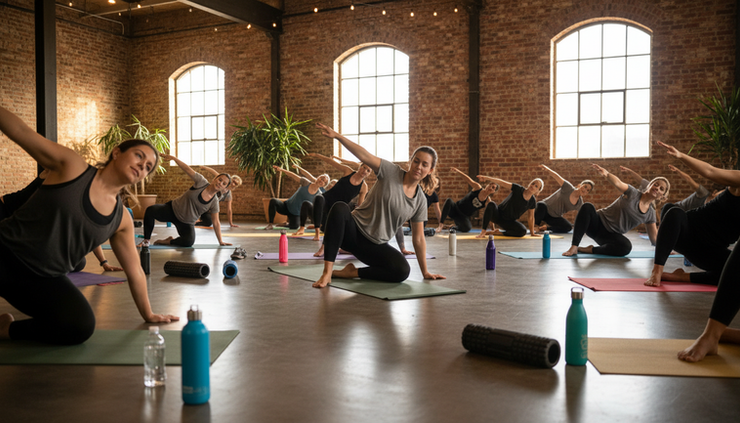
Active Recovery Group brings recovery into the community
Recovery can feel lonely when it’s just you, a nagging injury, and a list of exercises saved in your phone.
That’s one reason the Active Recovery Group stands out. They create a space where movement, recovery, and community can live together. Instead of treating recovery like something you do only after something goes wrong, they help make it part of the lifestyle.
From the outside, the value is easy to see. Groups like this bring people together around things that actually support long-term movement:
Mobility sessions
Recovery-focused education
Connection with other active people
Local events that make wellness feel social
A reminder that taking care of your body isn’t a punishment
That last piece is underrated.
For a lot of active people, rest and recovery can feel like failure. Active Recovery Group helps shift that mindset. Recovery becomes something strong people do because they want to keep moving well.
The best recovery culture doesn’t tell people to stop living. It helps them keep doing what they love with more awareness.
We’ll be at their next event on September 20 at Blend.Co, and we’re excited to connect with people who care about staying active, learning about their bodies, and building better habits outside the clinic. Go here to buy your ticket: Join Denver Community Wellness Day Social by ARC | The City’s Wellness Club
If you’ve been dealing with a stubborn injury, tightness that keeps coming back, or that “I’m fine, but not really” feeling, events like this are a great place to start asking better questions.

Five movements around the house that may be affecting your mobility
Most people think mobility issues come from workouts. Sometimes they do. But a lot of stiffness and irritation gets fed by normal household movements done over and over.
Here are five common ones worth checking.
1. Bending from the back to pick things up
Laundry baskets, shoes, dropped keys, dog bowls, grocery bags, kids’ toys. The floor is basically a daily mobility test.
If every bend comes from rounding the low back while the hips stay stiff, the back may start doing more work than it wants to.
Try this instead.
Keep the object closer to your body. Soften the knees. Push the hips back a little. Let the legs help. For lighter objects, a small hip hinge may be enough. For heavier items, step closer and use both hands.
Think “get close, then lift,” not “reach and yank.”
2. Twisting while carrying
This one catches people all the time.
You grab a laundry basket, twist to set it down, reach into the trunk and rotate with bags in hand, or turn from the sink to the dishwasher while holding plates.
Twisting isn’t bad. Loaded twisting when rushed can be the issue.
Try this instead.
Move your feet before you move the load. Turn your whole body toward the target. Keep the item close to your center. If something is heavy or awkward, break the trip into two steps.
It might feel slower at first. It usually saves energy once it becomes automatic.
3. Reaching overhead with a flared rib cage
Putting dishes away, grabbing storage bins, changing a lightbulb, or reaching into a high closet can expose shoulder and upper-back limits.
If the shoulder doesn’t have enough range, the body often borrows motion from the low back and ribs. That can leave the neck, shoulder, or back feeling tight later.
Try this instead.
Stand closer to the shelf. Exhale before reaching. Keep the ribs from popping forward. Use a step stool for high storage instead of forcing the shoulder into a strained position.
If one arm always feels pinchy overhead, that’s a good thing to bring up during an assessment.
4. Dropping into the couch and pushing up with momentum
The couch is comfort, but getting in and out of it can be sneaky.
Soft seats often put the hips low and the spine rounded. Then standing up becomes a mix of neck strain, back rounding, and a big momentum swing.
Try this instead.
Scoot to the edge first. Place both feet under you. Lean forward from the hips. Press through the whole foot and stand tall. On the way down, control the last few inches instead of dropping.
That simple change turns a daily movement into low-key strength work.
5. Walking stairs on autopilot
Stairs reveal a lot about ankle mobility, knee control, hip strength, and balance.
Common signs of compensation include turning one foot out, gripping the railing hard, dropping heavily onto each step, or avoiding one leg without realizing it.
Try this instead.
Slow down for a few reps each day. Let the whole foot land. Keep the knee tracking in line with the toes. Use the railing for balance, not as the main engine. If going down stairs bothers the knee, shorten the step and control the lower slowly.
Stairs are one of the best real-life ways to notice progress because they’re hard to fake.

Mindful ways to change day-to-day movement
Changing movement doesn’t mean obsessing over posture all day. Nobody needs that.
The goal is to build a few better defaults. Small adjustments done often can calm irritated areas and build useful strength.
Here are practical swaps that fit real life.
Before lifting something
Pause for one breath, step closer, and decide if it needs one hand or two.
Before standing from the couch
Scoot forward, place the feet, and stand with control.
Before using the stairs
Slow down for the first few steps and feel the whole foot.
Before reaching overhead
Stand closer, exhale, and use a stool instead of forcing the shoulder.
Before carrying bags
Split the load, switch sides, or hold weight close to the body.
Before doing chores
Change positions often instead of staying bent over for long stretches.
A few more rules of thumb can help.
Use pain as information, not a panic button. Sharp, worsening, or lingering pain deserves attention. Mild effort, stretch, or muscle work can be normal depending on the movement and injury.
Make the easy version your default. If a task always irritates something, lower the demand. Use a smaller load, shorter range, closer position, or more support.
Spread movement through the day. Two minutes done five times can be more realistic than one long session that never happens.
Practice the movements you actually need. If stairs bother you, train step-down control. If lifting bothers you, learn a better hinge. If sitting stiffens you up, build standing breaks into existing routines.
This is where in-home care shines again. A provider can help spot the exact daily habits feeding the issue and give you a plan that fits the space you already live in.

The real win is care that fits your life
The best recovery plan is the one you can actually follow.
Coordinated care at home works because it looks at the full picture: your symptoms, your goals, your schedule, your home setup, your training, and your daily movement habits. Pair that with a community like Active Recovery Group, and recovery starts to feel less like a detour and more like part of staying active for the long run.
If something has been nagging for weeks, don’t wait until it becomes the thing that stops you completely. Start with the basics. Notice how you lift, reach, carry, sit, stand, and take the stairs. Get support when the pattern isn’t clear. And if you’re local, come connect with us on September 20 at Blend.Co at the next Active Recovery Group event (Join Denver Community Wellness Day Social by ARC | The City’s Wellness Club).
This content is for education only and isn’t a substitute for personal medical care. If pain is severe, new, spreading, or connected to numbness, weakness, dizziness, or a recent injury, get checked by a qualified healthcare professional.
Comments